Welcome to Sweet Nothings Crochet for loads of free crochet patterns, video tutorials & awesome creations. If you want to learn, or just want to see some great free patterns, you're in the right place. All my blogs have video tutorials with loads of ideas thrown in for good measure. Thanks for dropping by and I hope you'll stay a while.
Thursday, 6 October 2016
BEAUTIFUL DIAMOND BABY DRESS
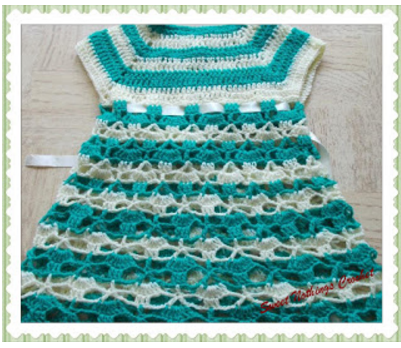
Today you'll love this beautiful crochet diamond baby dress for a 2-yr old that we're creating. The easy crochet pattern uses very simple stitches. I've worked the yoke in cream and the skirt portion of the dress is in pink - so it looks like a skirt & blouse which my client just loved. I made this lovely dress for a friend's grand daughter. She's chosen three dresses for the little girl (all of which have or will be shared here on my blog) - and of course, had the cute lil thing 'model' one after the other.. so it was fun at first, and then she just wanted to "keep this one on, mum" .. so in a bit when you see her photos, you'll see what I mean. (lol)
With each new creation, I find that there is something
new I can add to my blog .. a new pattern idea or a way to get it done.. and so
I’d like to suggest that you first go through my blog to get an idea of what
we’re creating and then you can be all prepared and as excited as I am. Thank you for joining me.
In case you have just joined me, know that you can access all of my earlier creations by checking under ‘categories’ on the right hand side of this blog under “Labels”.
How labels work : All patterns under a similar label can be found together so when you click on the label for say "crochet baby dress pattern", all my baby dress patterns are available - so scroll down to the very bottom and click on "Older Posts" to move onto the next post in the series. Before you reach that you have several other ways to find my blogs including blog links at the bottom of this blog For your convenience, follow me here or on Facebook, You Tube, Pinterest, Twitter or Instagram. Oh, and may I add that the fastest way to find any of my blogs is via Pinterest and if you are looking for more children wear then come here All my blogs can be printed. Find theprint friendly (green) link on the right of this blog. You can also hit Control P (or Command P for Mac) on your keyboard, and the blog will go directly to the connected printer. Remember that you only print if absolutely essential. Save paper – Save Our Earth.
Do remember to add my blog URL when you make and show off your creation.
Just copy the link on the search bar above - that's the blog URL.
Please note that I start all my rows with a ch 1, turning chain for ease.
Please check the top of this blog for easy video tutorials on all stitches used in today's pattern.
Please read through all my notes before you pick up your hook, so you know just where we're heading in our pattern.
In my patterns I work with the principle of stitch count and body measurement.
This means that you need to work the stitch count in pattern, till you get the measurement (length and/or width) that you need for your project.
I do not claim this to be my pattern , but here are my pattern notes as I make my own original project
So here she is a little worried that there's another dress change and 'free' modelling exercise coming along ..
and here she's plain frustrated that she is right !!
So before we set off on our new creative
journey, let’s take a quick look at what we’re creating here today.
We start with the yoke, working from the chest /
waist up.
Now it’s up to you to decide
*where* your *waist* is – by that I mean that you can have it just under the
armholes, or you could go way lower to the waist.
I found some charts on this link, but the write up is not in English. Please visit this link for a neat photo tutorial. Thanks.
So let's carry on. Remember that you need to ensure that you need to work with the largest
of these measures (i.e if you want your yoke starting at waist, but the chest
measure is larger, then that’s you will use half the chest measure)
We will then work on the skirt portion of our
dress off the bottom of the yoke.
Now there is a link for a set of charts
depending on age of child and I’d suggest we use that as a reference.
You will take a look at the chart for the yokes,
and you will work it according to the numbers given for the size on your
chart
There is a link given above for chart on square
neck sizing.
Check that out before you start, in case you do not have a well-fitted
outfit of the child you’re making this for.
And just when you thought we’re going to pick up
our hooks, I’m holding you back with more *ideas* and *tweaks*.
As I’ve said before, I love little baby dresses
with a little flare and not totally “A”-lined and here’s what I’ve done to add
flare in this dress.
When the pattern repeat for the skirt portion is a long/large one, then with
the restricted number of stitches for the tiny chest portion (esp for a small
baby dress), we need to figure a way to add stitches for the skirt… all on that
first round.
Remember here that if you alter the pattern
repeat given, you need to calculate the number of stitches you are starting
with on your own
a)In
the pattern below, it will say “sk … sts” (the … being indicative of number of
sts). So you could reduce the gap
and reduce the number of sts skipped.
b)You
keep the number of sts skipped the same, but instead of using 3 sts for the 3
dc in between, on that first round , you work all 3 dc in the 1st
st
c)You
combine both (a) and (b)
All this said, I am going to write the pattern
instructions as charted and you can tweak it and create your beautiful dress as
you please
PART I : YOKE
We will work one part for the front and one for
the back. The only difference for back
and front is that there will be an opening for the back, so we will work from
the armhole to the centre of the back yoke one side at a time.
The stitch count for our pattern today is in multiples of 3 + 1
sl-st in the 1st dc and the 1st
ch-sp of the next “V”-st ;
dc in the next “V”-st ch-1 sp ;
“V”-st in the next “V”-st and in each “V”-st
till the 2nd last “V”-st ;
dc in that “V”-st ch-1 sp. Turn.
Rep Row 3 without further decrease till your
project reaches the neckline edge.
Neckline decrease idea :
The neckline decrease is similar to the armhole
decrease.
So first you need to decide
how deep you want your neckline, and also decide how wide you want it. Place a marker at that point.
You will work back and forth from the armhole
edge to the marked “V”-st ch-sp (which is the marked stitch), and you will work
a dc in that ch-1 sp.
You will then continue rep of Row 3 till you
reach the shoulder level.
Fasten off and weave in ends.
Rep these instructions for the other side as
well as the back.
Remember that for the back, you will be working a small button placket, and so
you will decide where you want that placket, and then work back and forth from
the armhole to this point and back.
Once you’ve done both the front and the back,
attach the shoulders and sides and you have your lovely yoke complete. We will then work our skirt portion in rounds.
If you’ve decided on keeping your dress
sleeveless, then ignore this section, and carry on straight to Part 3 for
neckline or Part 4 for the skirt.
PART 2 : SLEEVES
Re-attach your yarn at the armhole and let’s run
a round of sc all around, in multiples of 3.
Join with a sl-st to the 1st st.
Unfortunately, with one silly(?) quick movement of my mouse, I deleted ALL my photos as I was working - and am just lucky that my friend obliged with all these photos - else this project would have been terribly drab!
Sorry, but no close-up photos of sleeves or neck... or the cute little heart motif.
Single Crochet : Sc : yo, insert hk into st ; yo (2 lps on hk); yo, draw through both lps. One sc made. Check out the video at https://youtu.be/ghACqBpA-3k
First stitch for Single Crochet : This is how I like to start my row of sc. Check out the video at https://youtu.be/6pVYRfsf4_M
ch 1,
sk next sc and join with a hdc to the 1st sc.
You are now in the centre of that last ch-3 sp.
Round 2 : sc in the 1st ch-3 sp ;
*ch 3, sc in the next ch-3 sp* ;
rep *to* all around till the last ch-sp ;
ch 1,
and join with a hdc to the 1st sc.
You are now in the centre of that last ch-3 sp.
Rounds 3 - 5 : Rep Round 2.
Round 6 : sc in the 1st ch-3 sp ;
*5 dc in the next ch-3 sp ; sc in the next ch-3
sp* ;
rep *to* all around and join with a sl-st to the
1st sc.
You can fasten off here, or continue for the
final optional round.
Optional Round 7 : sl-st in the 1st 2 dc, sc in the
next dc ;
*sk next 2 dc, 5 dc in the next sc ; sk next 2
dc, sc in the next dc* ;
rep *to* all around and join with a sl-st to the
1st st.
Fasten off and weave in ends.
PART 3 : NECKLINE / COLLAR
Re-attach your yarn at the neckline and let’s
run a round of sc all around, in multiples of 3. Join with a sl-st to the 1st st.
There are two options for the neckline/ collar –
a smaller and a larger / longer version.
Collar Option 1 :
Round 1 : sc in the 1st sc ;
*ch 3, sk next
sc, sc in the next sc* ;
rep *to* all around till the last 2 sc ;
ch 1, sk next
sc and join with a hdc to the 1st sc.
You are now in the centre of that last ch-3 sp.
Round 2 : sc in the 1st ch-3 sp ;
*ch 3, sc
in the next ch-3 sp* ;
rep *to* all around till the last ch-sp ;
ch 1, and join
with a hdc to the 1st sc.
You are now in the centre of that last ch-3 sp.
Round 3 : sc in the 1st ch-3 sp ;
*5 dc in
the next ch-3 sp ; sc in the next ch-3 sp* ;
rep *to* all around and join with a
sl-st to the 1st sc.
Fasten off and weave in ends.
Collar Option 2 :
Rep Rounds 1 and 2 from Option 1.
Rounds 3 - 5 : Rep Round 2.
Round 6 : sc in the 1st ch-3 sp ;
*5 dc in the next ch-3 sp ; sc in the next ch-3
sp* ;
rep *to* all around and join with a sl-st to the
1st sc.
You can fasten off here, or continue for the
final optional round. I say this as it
depends on where you ended your sleeve – so if you did one round of 5 dc’s and
want a similar ending, you can end here.
See so many options .. & all for one tiny
collar
Optional Round 7 : sl-st in the 1st 2 dc, sc in the
next dc ;
*sk next 2 dc, 5 dc in the next sc ; sk next 2
dc, sc in the next dc* ;
rep *to* all around and join with a sl-st to the
1st st.
Fasten off and weave in ends.
PART 4 : SKIRT
We return to the start fsc round and we will now
be working on the other side of that round for the skirt portion of our dress.
Even before we start on our skirt, I’m throwing
a few ideas out at you.
Remember as I’ve mentioned before that you can
always add or remove stitches and ch-sps to add to the flare of a skirt or
reduce the laciness of a garment. That
said, let’s start with the skirt.
In our dress here, we are starting with a dc
3-tog in the 1st round, so this is where you will tweak your stitch
number.
You must have the stitch count needed, but for
more of a flare, you will add more stitches (in multiples of stitch count
given)
Our pattern repeat for the skirt portion is 7. So to start, check if you have the right number
of stitches, else run a round of sc around the base of the fsc and get the
number of stitches we need.
In our very first round, we will start with a dc
3-tog.
In the following round, we’ll add one diamond
along the centre dc 3-tog.
Round 7 : dc 3-tog in the 1st dc 3-tog ;
*[ch 2, dc in the same dc 3-tog ;
ch 2,
dc 3-tog in the same dc 3-tog] ;
(ch 2, dc 2-tog over the next 2 dc ;
dc in the
next 3 dc ; dc 2–tog over the next 2 dc)* ;
rep *to* all around,
and join with a sl-st to
the 1st st.
Round 8 : dc 3-tog in the 1st dc 3-tog ;
*[ch 2, 3 dc in the next dc ;
ch 2, dc 3-tog in
the next dc 3-tog] ;
(ch 2, dc 2-tog over the next 2 dc ;
dc in the
next dc ; dc 2–tog over the next 2 dc) ;
ch 2, dc 3-tog in the next dc 3-tog* ;
rep *to* all around,
and join with a sl-st to
the 1st st.
I am sure you see what we’ve done thus far, and
that we’ve successfully completed one pattern repeat. We’ve started on our next set of diamonds,
and are slowly closing up our first diamond.
So our next round here is a repeat of Round 3 in
part, as you’ll see.
Round 9 : dc 3-tog in the 1st dc 3-tog ;
*[ch 2, 2 dc in the next dc ;
dc in the next dc
; 2 dc in the next dc] ;
ch 2, dc 3-tog on the next dc 3-tog ;
(ch 2, dc 3–tog over the next 3 sts) ;
ch 2, dc 3-tog on the next dc 3-tog* ;
rep *to* all around,
and join with a sl-st to
the 1st st.
Round 10 : dc 3-tog in the 1st dc 3-tog ;
*[ch 2, 2 dc in the next dc ;
dc in the next 3
dc ; 2 dc in the next dc] ;
(ch 2, dc 3-tog on the next dc 3-tog) ;
ch 2, dc on the next dc ;
rep (to) once* ;
rep *to* all around,
and join with a sl-st to
the 1st st.
Round 11 : dc 3-tog in the 1st dc 3-tog ;
*[ch 2, dc in the next 7 dc] ;
ch 2, (dc 3-tog on the next dc 3-tog) ;
ch 1, sk
next dc, rep (to) once* ;
rep *to* all around,
and join with a sl-st to
the 1st st.
Round 12 : dc 3-tog in the 1st dc 3-tog ;
*[ch 2, dc 2-tog over the next 2 dc ; dc in the
next 3 dc ;
dc 2-tog over the next 2 dc] ;
ch 2, (dc 3-tog on the next dc 3-tog) ;
ch 2, dc
in the next ch-1 sp ;
ch 2, rep (to) once* ;
rep *to* all around,
and join with a sl-st to
the 1st st.
In the following round, we’ll add one diamond
along the centre dc 3-tog.
Round 13 : dc 3-tog in the 1st dc 3-tog ;
*(ch 2, dc 2-tog over the next 2 dc ; dc in the
next dc ;
dc 2–tog over the next 2 dc) ;
[ch 2, dc in the next dc 3-tog ;
ch 2, 3 dc in
the next dc ;
ch 2, dc 3-tog in the next dc 3-tog]* ;
rep *to* all around,
and join with a sl-st to
the 1st st.
Round 14 : dc 3-tog in the 1st dc 3-tog ;
*(ch 2, dc 3-tog over the next 3 sts) ;
ch 2, dc in the next dc 3-tog ;
[ch 2, 2 dc in
the next dc ;
dc in the next dc ; 2 dc in the next dc] ;
(ch 2, dc 3-tog in the
next dc 3-tog)* ;
rep *to* all around,
and join with a sl-st to
the 1st st.
We have completed one pattern repeat and you see
what we’re doing here.
We’re working a
new diamond pattern in between the existing two diamonds and at the same time,
we’re working the ends of two diamonds.
I also know that you have understood the
pattern, but I am unable to give you an exact pattern repeat as our
start and ends have moved a bit.
So our repeat rounds are Rounds 9 – 14, but remember that the start / ends
of the rounds may be a little different.
You will figure that out though.
So when do you stop your repeats?
Well as I have decided to go with this pattern repeat all the way till the
bottom, you just decide to stop when you get the final length you need for your
dress. Easy enough, right?
Fasten off and weave in ends.
PART 5 : BELT / HEADBAND
I can see how confused you look on reading the
heading here. Well, what I plan is on making this little
strip and then working a row of shells (like we’ve done around the sleeves and
collar), and then you can decide on the length of this strip – thereby deciding
if you want it as a belt or headband.. or make one each .. How smart is this??
Right??
Check out the blog link (original) given above to see what that designer has whipped up too.
Foundation double crochet (fdc) : This is a unique way of starting a project directly with a row of double crochet stitches. Here is an easy video tutorial https://youtu.be/hjNUYVvyU9k
Start : with about 6 fdc (which in my case equals
about 1”).
This is the width of your
belt – and this does not affect the pattern in any way.. so make it as wide or
thin as you want. Turn.
You can also decide if you want to use a sc /
hdc / dc in each st till end.
Row 1 : dc in the 1st fdc and in each fdc
till end. Turn.
Row 2 : dc in the 1st dc and in each dc
till end. Turn.
Rep Row 2 till you have a strip that goes around
the waist (for a belt) or around the head (for a headband).
Next Row : sc in the 1st corner dc.
We will now work a border around the side of the
belt, so we will turn our work 90˚ and work along the longer side of the belt
all the way to the end.
We will then turn our work 90˚ again, and work
slip stitches along the 6 fdc end.
We will then turn our work 90˚ again, and work
along the second long side of the belt all the way to the end and Turn.
So in our 1st foundation row here, we
need to work an even row of ch-3 sps in multiples of 2. We will work a 5-dc shell (as before) in
every alternate ch-3 sp
Last Shell Border Row : sc in the 1st ch-3 sp ;
*5 dc in
the next ch-3 sp ; sc in the next ch-3 sp* ;
rep *to* all the way to the end,
only
working along the long border and working sl-st along the 6 fdc start row(s).
Fasten off and weave in ends.
Belt & Headband finishing : The designer has neatly attached a ribbon to
the two ends of the belt. This is a neat
idea even for your headband. Of course,
you could opt to add a button at the back of the belt, and for your headband
you could add an elastic at the end for ease.
PART 6 : EXQUISITE LITTLE HEART
The teeny tiny heart is a darling one and I
couldn’t resist making this too.
Start : with a magic circle and we will be adding all
these stitches directly into that circle.
So pull it lightly to close, but leave a small gap.
Round 1 : ch 3 ; 3 trc ; 3 dc ; ch 1, 1 trc ; ch 1, 3
dc ; 3 trc ; ch 3 and join with a sl-st to the 1st st.
I suggest you leave a longish tail so you can
use that to neatly attach this cute lil heart to your garment.
PART 7 : Delightful idea for a button DIY
I should
also share a new idea I had for the button. I had these lovely little pink
beads that I’d already used on that final row, and thought they’d look lovely
as a button. So first I took a regular shirt /pant button and covered it with a
little fabric. I then sewed in the beads
onto that little fabric top. The base of
the button was easy to attach on, as there is the fabric to hold on to.. and I
think the end result is pretty amazing.. what do you think?
Ta da..
isn’t this just beautiful ?? It has been a loooonnnnng journey, but oh my gosh..
there are so many beautiful elements here.. and you can use this pattern sheet
as a “go-to” for so many more projects.
I am totally thrilled !
Enjoyed this ?? I sure did.. come back right
here for more freebie patterns
If you're visiting me here for the first time, and have liked the experience, do add me to your mailing list (for your convenience) , and all my future free patterns will come straight to your mail box.
I’d appreciate if you could credit my blog (and link the original pattern link) when you make your own creation. Thanks.






No comments:
Post a Comment
Thanks for taking the time to stop by. Do tell me what you think. Cheers